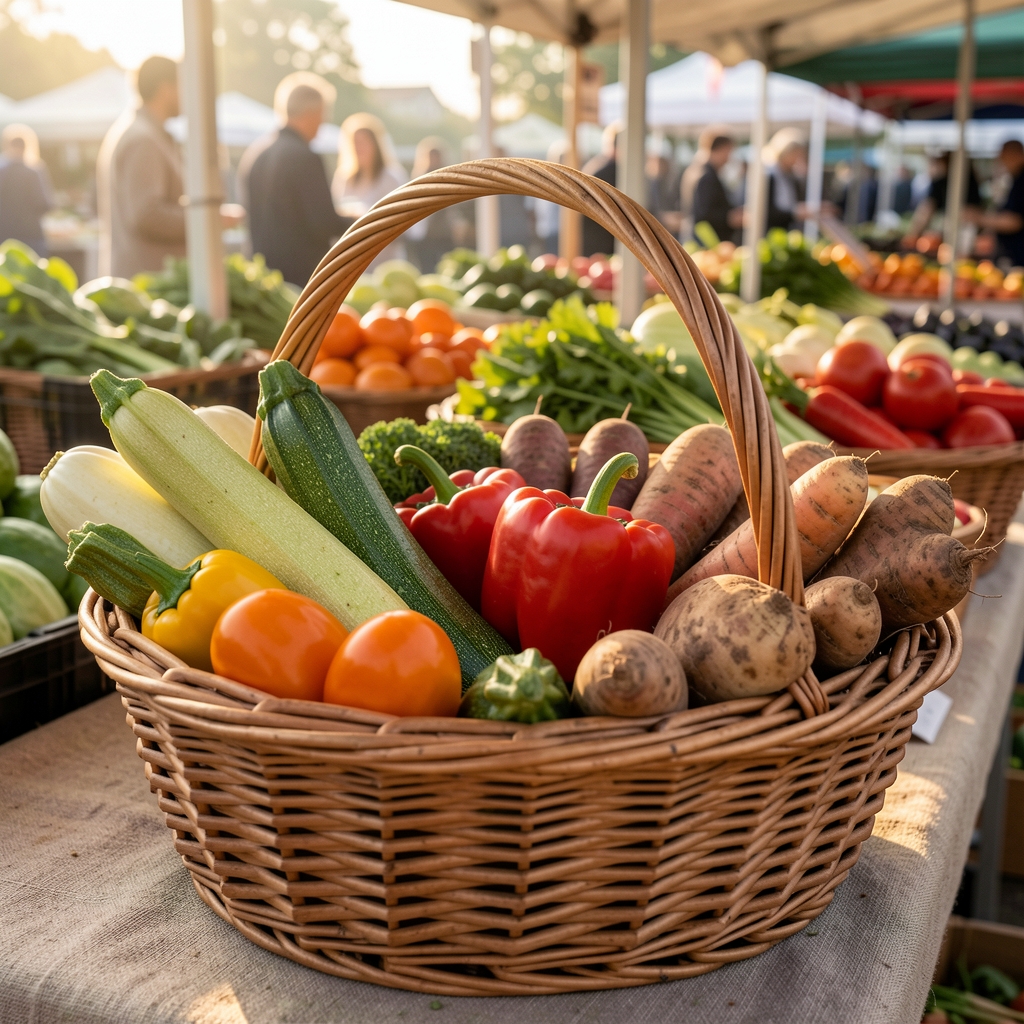
In the first week of January, when the market stalls in Exmouth Market shift from root vegetables and brassicas toward the first forced rhubarb and stored-winter squash, something changes in the week's pantry. This observation, repeated across four years of food journalling, is the starting point of this record.
What the Market Tells the Plate
There is a pattern that becomes visible once a person has maintained a food journal through several full calendar years: the composition of the week's plates does not stay constant. It oscillates in response to what is available, what is affordable, and what the weather has made appealing. January in London is a period of relatively narrow but nutritionally dense seasonal availability. Leeks, celeriac, parsnip, Brussels sprouts, kale, Savoy cabbage, and stored apples dominate the market stalls that are still operating after the Christmas hiatus.
The nutritional density of these vegetables is not a small matter. Dark leafy brassicas and root vegetables contribute to dietary fibre and a sustained sense of fullness between meals — qualities that become legible in a food journal as a reduction in unplanned snacking and a more settled eating rhythm through the afternoon. This is not a programme. It is an observation about what naturally arrives when the plate is built around what the season offers rather than what habit or convenience defaults to.
In four years of records, the January weeks consistently show a higher proportion of cooked vegetables relative to the summer months, where raw salad components dominate. The total weight of plant material consumed across the day — rough estimates drawn from the journal — remains broadly similar in both seasons. What changes is texture, warmth, and the specific contribution each food makes to the sense of a meal being complete.

How Seasonal Produce Relates to Body Weight Across the Year
The relationship between seasonal eating and body weight is not direct or simple. What a food journal can track, however, are the correlations: in weeks where a greater proportion of the total daily food intake consists of vegetables and fruit, the journal entries consistently show a different quality of appetite — less insistent, more gradual, without the sharp contrasts between hunger and satiation that characterise weeks heavy in processed or refined foods.
Published nutritional research on dietary fibre and satiety provides a consistent evidence-informed framework for this observation. Dietary fibre, found in abundance in root vegetables, legumes, and whole fruits, supports a sense of fullness between meals. This is documented across a broad base of nutritional literature and aligns with what the food journal records: a well-composed winter plate, built around high-fibre seasonal produce, tends to produce a different rhythm of eating across the day than one built around white rice, pastry, or ready-prepared components.
Gradual weight change — the kind that registers over weeks rather than days — is rarely attributable to a single meal or food choice. What accumulates in the journal over a month is more instructive: a consistent preference for whole foods, varied across the available seasonal range, appears to produce a quieter, more stable relationship with appetite than a diet relying heavily on a narrow range of processed staples.
Structuring the Week Around Seasonal Availability
The weekly food rhythm that emerges from seasonal eating is one of the more underappreciated aspects of nutritional practice. In place of a fixed meal plan — which research consistently shows is difficult to maintain over long periods — the seasonal rhythm offers a structure that renews itself every four to six weeks as the available produce changes. This cyclical renewal is not a feature of processed food supply chains, which offer near-constant uniformity; it is specific to fresh, seasonal produce sourced from markets, farm boxes, and independent grocers.
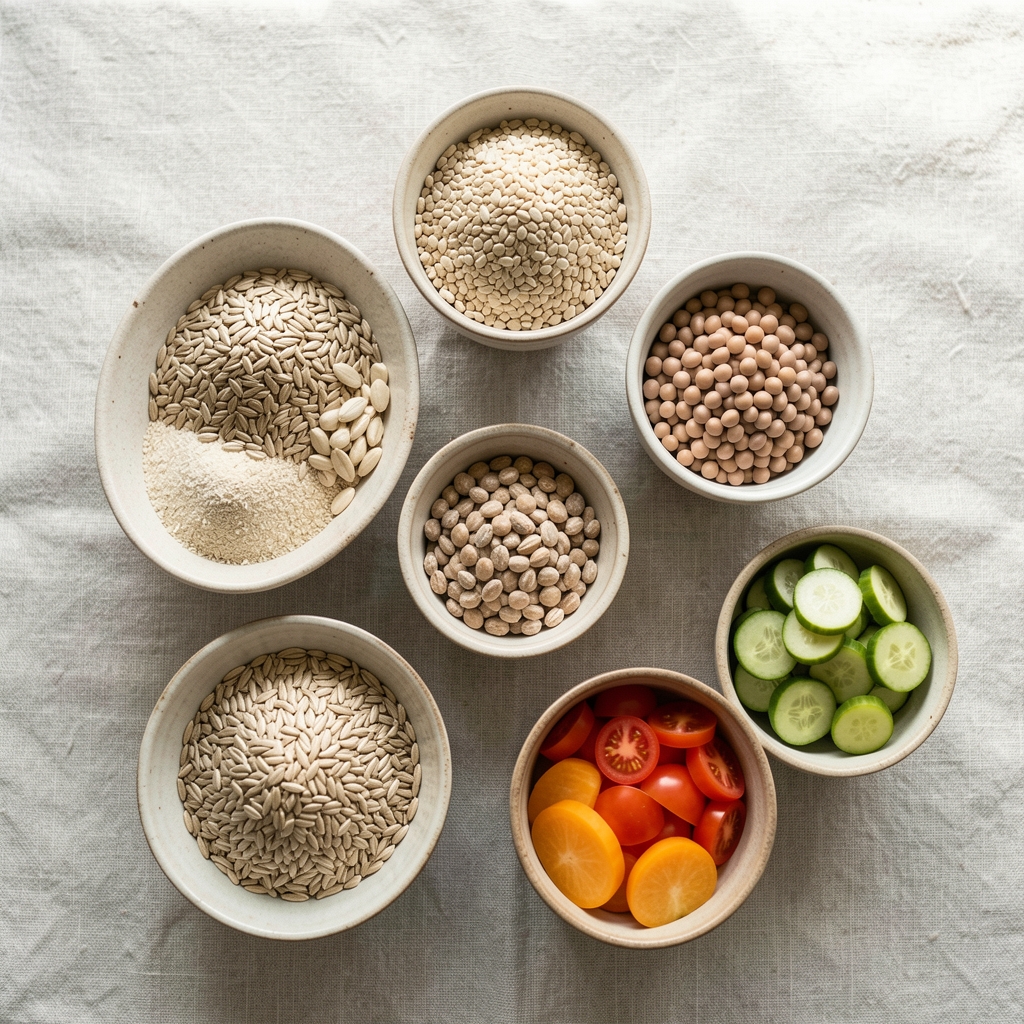
In practice, this rhythm looks like a market visit early in the week, a decision made based on what is available and appealing, followed by three or four evenings of home cooking from those ingredients. The pantry base — dried lentils, whole grains, tinned legumes, olive oil, fermented staples — stays broadly constant. What varies is the vegetable component. In January, that component is built around the brassica family, roots, and alliums. By March, purple sprouting broccoli and the first wild garlic begin to appear. By April, asparagus and spring greens reshape the week entirely.
A food journal maintained across this rhythm begins to reveal patterns that are invisible to weekly snapshots. The proportion of animal protein in the week's meals tends to decrease slightly in summer, when the variety of plant-based components is at its widest. The proportion of fermented or preserved foods tends to increase in winter. Total caloric variation across the seasons is modest in the journal, though the sources of those calories shift considerably.

Variety as the Practical Unit of Nutritional Balance
One question that arises in any sustained food journalling practice is whether nutritional balance requires active tracking — counting macronutrients, monitoring intake against recommended daily values, measuring portions in grams. The answer, based on four years of this journal and a review of published dietary research, is more nuanced than either yes or no.
Specific nutritional deficiencies benefit from specific awareness — vitamin D in northern European winters, B12 for those following predominantly plant-based eating patterns, iron for some individuals. These are matters for a qualified nutrition professional to assess individually, not for a food journal to resolve. What the food journal can monitor effectively is variety: the diversity of plant foods across the week, the range of protein sources, the proportion of whole versus refined grains, the frequency of fermented foods.
In the January week documented in this record, the variety count — distinct plant species consumed across seven days — reached fourteen. That figure appears unremarkable until compared against the average observed in weeks without a market visit: the variety count drops to seven or eight, drawn from a narrower set of familiar, convenient staples. The nutritional breadth represented by fourteen distinct plant species versus seven is not trivial. It represents the difference between a diet that draws on a wide nutrient profile and one that increasingly depends on a few reliable sources.
From the Journal: The Pattern Behind the Weekly Plate
The conclusion drawn from this January record is not that seasonal eating is a programme to follow, or that the winter market is a superior nutritional source. What the record suggests is more modest and perhaps more durable: that building the week's plate around what is currently available from well-sourced seasonal produce creates, as a structural consequence, a diet that is varied, fibre-rich, and not dominated by processed or ultra-processed foods — because seasonal produce, by definition, is not ultra-processed.
The weight implications of this shift are quiet. They do not appear in a single week. They appear, gradually, in the difference between the food journal of a person eating a narrow, convenient diet and one eating a seasonally structured, varied diet over six months. The gradual weight change that nutritional literature consistently documents in populations with diverse, vegetable-rich diets is not a rapid intervention. It is a consequence of sustained pattern — which is precisely what a food journal is built to document.
This record will continue through the year, tracking the plate as it moves through the seasons. The next entry will examine the shift into February — a month that brings purple sprouting broccoli, early forced rhubarb, and the last of the stored apples from last autumn's harvest. The plate will change. The pattern will persist.
- 01. Seasonal produce from winter markets — brassicas, roots, alliums — supports dietary fibre and variety, which contributes to a settled eating rhythm and a sustained sense of fullness.
- 02. Food journalling across full calendar years reveals seasonal patterns in plate composition that are invisible to weekly or monthly snapshots of eating habits.
- 03. Variety — the number of distinct plant species consumed across the week — is a practical and journal-trackable indicator of nutritional breadth that does not require calorie counting.
- 04. Gradual weight change is a consequence of sustained eating pattern, not of individual meals — making the food journal a more useful tool than the single-meal photograph for tracking how food relates to body weight over time.

Eleanor Whitfield
Eleanor Whitfield is the editor-in-chief of Rokan Gazette. She has maintained a continuous food journal since 2022 and writes about the relationship between seasonal availability, everyday cooking, and gradual weight awareness from the publication's Clerkenwell editorial office. Her approach is observational rather than prescriptive — drawing on published nutritional research and first-person record-keeping in equal measure.
More from Eleanor